

The real change is not the one people think it is
The knee-jerk reaction right now is to believe that AI will replace creativity. That's not exactly what's happening.
What is really changing is the speed, the volume and the way content is produced. AI compresses certain steps, speeds up iterations and forces teams to rethink how they create.
The easier creation becomes, the more judgment matters
Creating content is becoming more accessible. Generating an image, an idea, a basic script or a variation takes less and less time.
But the more tools make execution easier, the more what they cannot automate becomes valuable: taste, direction, judgment, timing, cultural awareness. In short, everything that turns a result into a real idea.
AI does not eliminate the creative role. It shifts it.
The real break is not “machine versus human.” The shift is the movement of creative work.
Part of the job becomes faster: visual research, moodboards, previsualization, variants, exploratory scripts, first leads. The challenge is therefore no longer just to produce. The challenge is to choose better, guide better and filter better.
Producing faster does not mean creating better
This is where many people confuse speed and value.
AI can help you produce more. It doesn't guarantee that content will be stronger, more distinctive or more relevant. A brand doesn't win because it publishes faster. It wins when what it publishes has real direction.

The risk is not AI. It's content without a point of view
When tools become accessible to everyone, the real danger is not that creatives disappear.
The real danger is that the market fills up with content that is technically correct, but empty. Clean, fast, effective content... and completely interchangeable.
The best will not reject AI. They will learn to use it better than others.
The agencies and creators who get ahead will not be the ones who refuse AI on principle. They will be the ones who integrate it intelligently into their process.
Because at the end of the day, AI is not the goal. It is a tool. And like any tool, its value depends on the person using it, their vision and their ability to give it a clear direction.
Prompting is becoming a new form of creative direction
Knowing how to talk to AI is already becoming a skill. Not because typing a command is impressive, but because a good prompt requires precision, taste, structure and a clear vision of the desired result.
Prompt engineering, in a creative context, increasingly looks like a form of direction. The better someone can articulate an intention, frame an aesthetic, impose constraints and refine a result, the more they increase the tool's real value.
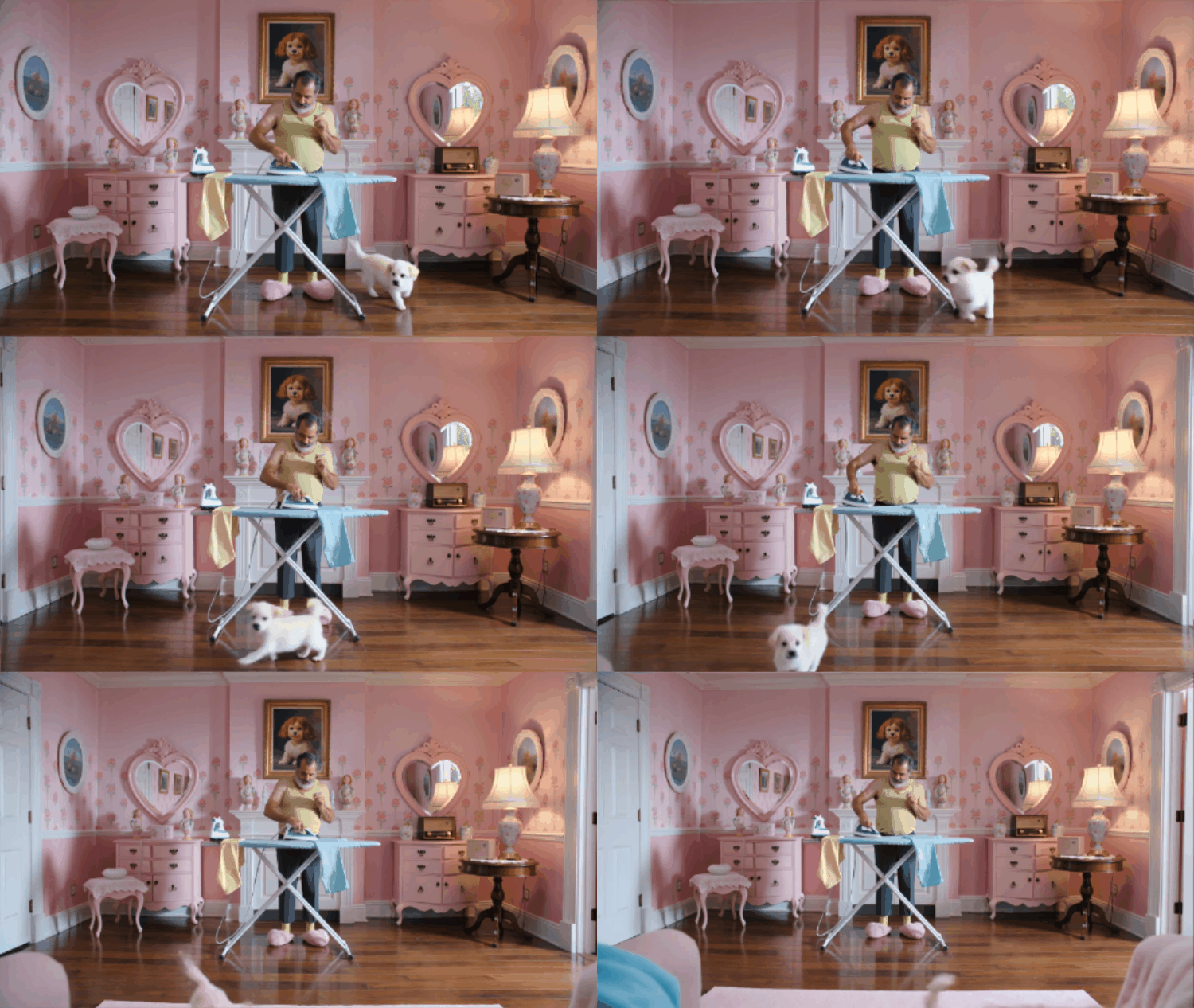
The real value remains in what a machine does not decide on its own
AI can generate an image. It does not know, on its own, whether that image truly strengthens a brand.
It does not know whether the idea is too generic, whether it arrives at the right time, whether it feels culturally right, or whether it already looks like everything else people are publishing. That's still where humans make the difference.
The upside is much greater than people say
The prevailing narrative often falls into extremes: either AI will replace everything, or it is useless.
The reality is much more interesting. AI can save time, reduce certain costs, speed up post-production, multiply tests, open new visual directions and allow a team to explore more without weighing down each project.
AI can make room for real creation again
That may be its most underestimated potential.
If certain processes become faster, teams can devote more energy to what really matters: the idea, the concept, the direction, the emotion, the coherence of a brand. AI does not necessarily take value away from creative work. It can also remove some of the surrounding noise.
The future will not be less human. It will require better humans.
The future of content will not be an endless stream of authorless creations.
It will be a world where generative tools will be increasingly powerful, but where the difference will hinge even more on the ability to think, choose and direct. The more machines are able to produce, the more the human quality behind the production will become visible.
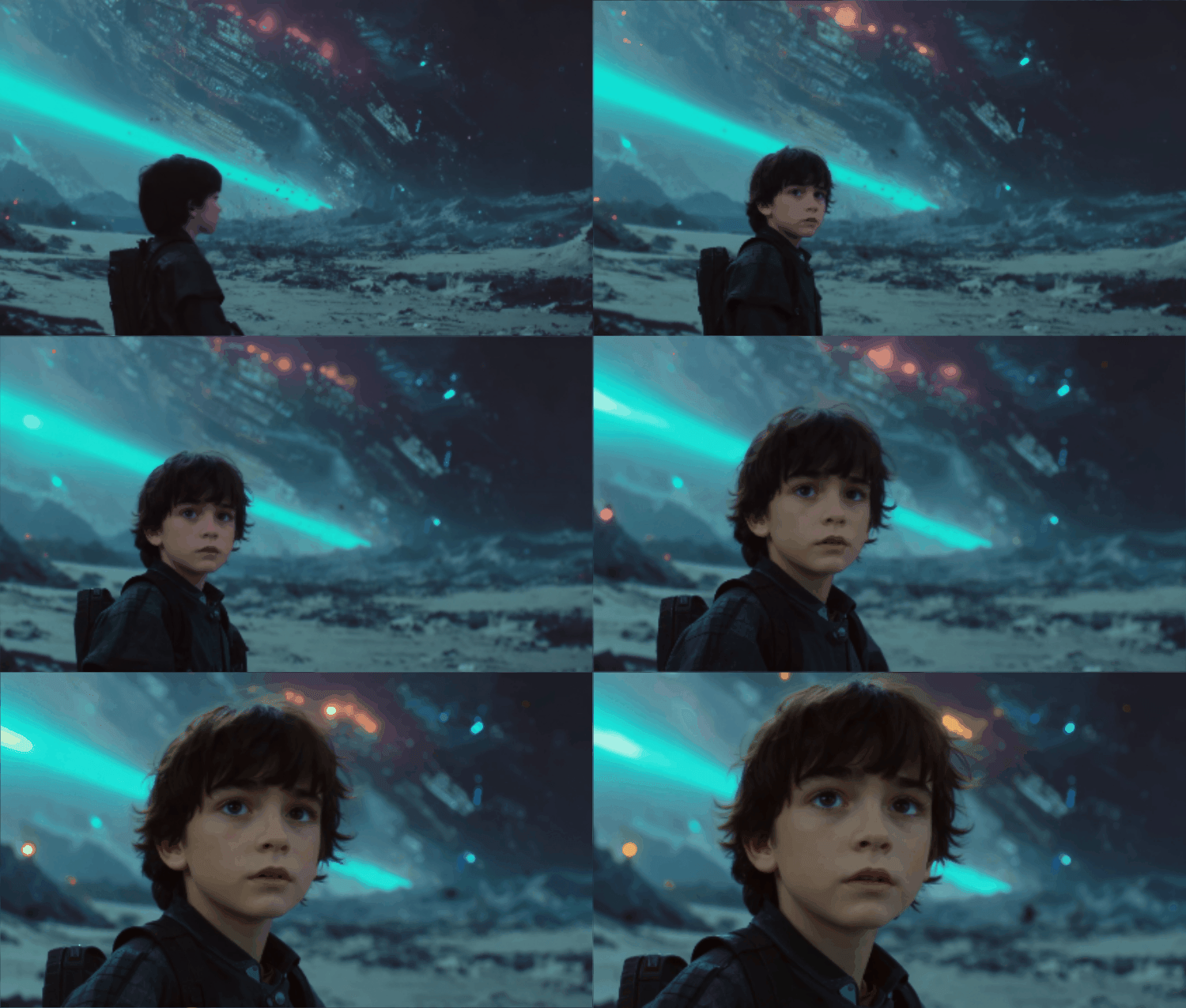
The future is not AI content, it's the human behind it
AI will clearly change production standards. It will speed up steps, reduce certain frictions and open new possibilities.
But it will not replace what makes content truly memorable: a vision, an instinct, a perspective, an intention. In creative work, technology can amplify. It does not replace the sensitivity that gives ideas real value.
The knee-jerk reaction right now is to believe that AI is going to replace creation. That’s not exactly what’s happening.

Let's stay in touch.
Learn more about high-performance web design. Follow us on Instagram.